

Listen to this article
Tap play — works on desktop and mobile
IVF treatment is a fertility procedure where eggs are fertilised outside the body and transferred into the uterus. It takes 4–6 weeks per cycle, success rates range from 3–47% depending on age, and costs vary based on clinic and location. Use our fertility quiz, ovulation calculator, and IVF cost calculator to plan your next step
What is IVF?
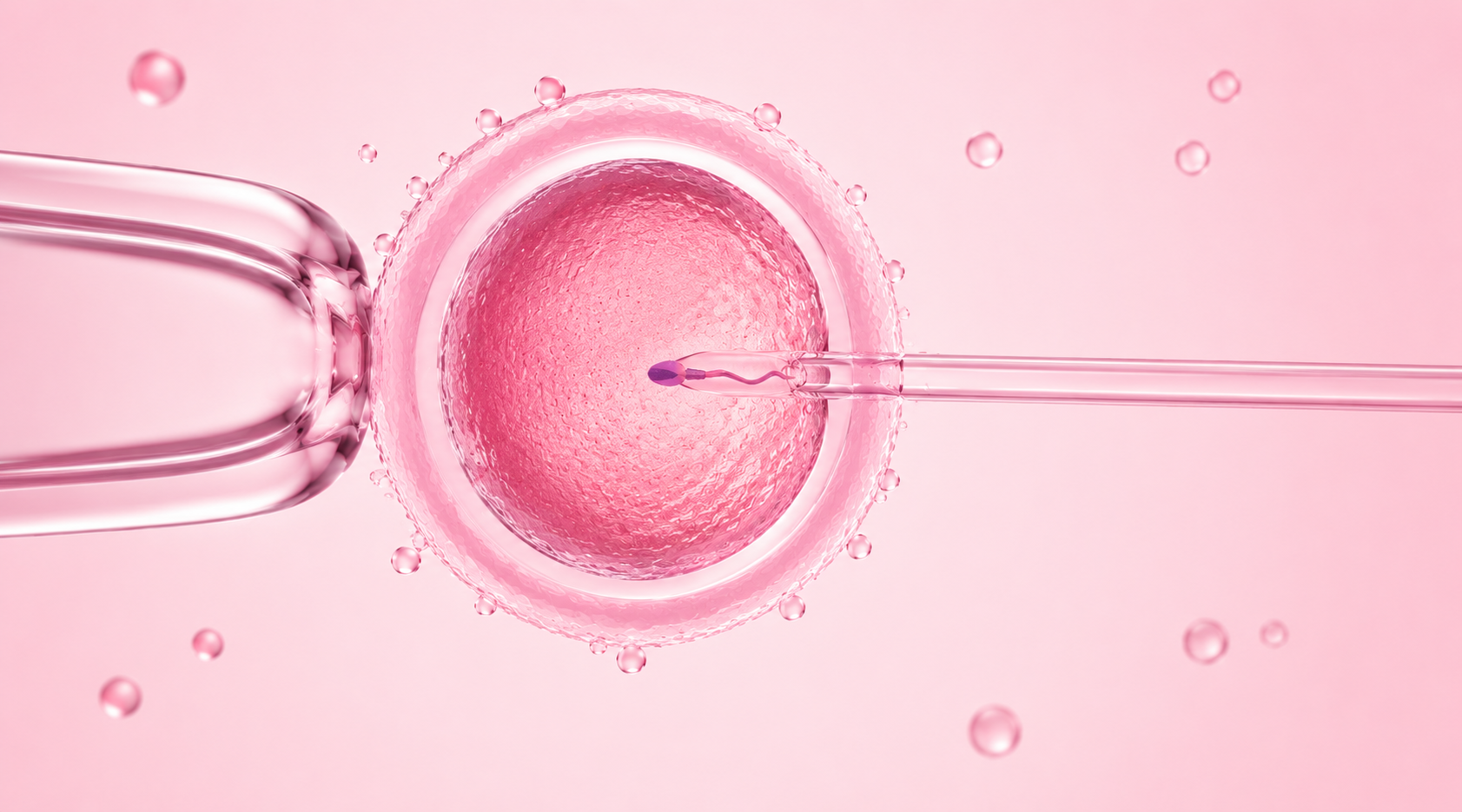
IVF treatment — short for In Vitro Fertilization — is a form of assisted reproductive technology (ART) where a woman's eggs are retrieved from her ovaries, fertilized with sperm in a laboratory, and the resulting embryo is transferred back into the uterus to establish a pregnancy.
The term "in vitro" comes from Latin, meaning "in glass" — a reference to the lab dish where fertilization takes place. IVF is one of the most well-researched and widely performed fertility treatments in the world. Since the first IVF baby was born in 1978, more than 8 million babies have been brought into the world through this process, making it a proven path for couples and individuals who face difficulty conceiving naturally.
Why is IVF Performed?
IVF treatment is recommended when natural conception is not possible or significantly difficult due to medical reasons. People choose IVF for a wide variety of reasons, including:
Blocked or damaged fallopian tubes — preventing eggs from reaching the uterus naturally
Low sperm count or poor sperm motility — reducing the chance of natural fertilization
Endometriosis — where uterine tissue grows outside the uterus, affecting fertility
Polycystic Ovary Syndrome (PCOS) — a common hormonal disorder affecting ovulation
Uterine fibroids — non-cancerous growths in the uterus that can interfere with implantation
Unexplained infertility — when no clear cause has been identified after thorough testing
Advanced maternal age — fertility naturally declines after 35, and IVF can significantly improve chances
Genetic disease risk — IVF allows for preimplantation genetic testing before embryo transfer
Same-sex couples or single parents — using donor eggs, donor sperm, or a gestational surrogate
Previous failed fertility treatments — such as IUI or fertility medications that haven't worked
Not sure if IVF is right for you? Take our fertility quiz for a personalised assessment based on your unique situation.
How Does IVF Work?
IVF works by taking the process of fertilization out of the body and into a controlled laboratory environment. Here is the simplified overview:
Hormone medications are used to stimulate the ovaries to produce multiple eggs.
Once mature, the eggs are retrieved through a minor procedure.
In the lab, eggs are fertilized with sperm — either from a partner or donor.
The fertilized eggs (embryos) are monitored for 5–6 days as they develop.
One or more healthy embryos are transferred into the uterus.
If the embryo implants into the uterine lining, pregnancy begins.
The entire IVF treatment cycle from start to pregnancy test typically takes 4 to 6 weeks.
How Does IVF Get You Pregnant?
IVF gets you pregnant through successful embryo implantation. Once the embryo is transferred into the uterus, it must attach itself to the uterine lining — a process called implantation. When this happens, the placenta begins to form and produces the pregnancy hormone hCG (human chorionic gonadotropin).
Your fertility clinic will schedule a blood test approximately 9 to 14 days after embryo transfer to measure hCG levels and confirm pregnancy. This blood test is more accurate and earlier than a home pregnancy test.
The chance of this working depends on several factors — your age, egg quality, sperm quality, and the health of your uterus. Women under 35 have the highest success rates, while the likelihood decreases gradually with age.
Is IVF 100% Successful?
No, IVF treatment is not 100% successful — but it is the most effective fertility treatment available. Success rates vary primarily by age:
Age Group | Approximate Live Birth Rate per Cycle |
|---|---|
Under 35 | ~46–47% |
35 to 37 | ~34% |
38 to 40 | ~21–22% |
41 to 42 | ~10–11% |
43 and above | ~3% |
Many patients achieve success after 2 or 3 cycles. Factors that influence success include egg quality, sperm health, embryo quality, uterine receptivity, lifestyle, and the experience of your fertility clinic.
Using our IVF cost calculator, you can plan financially for multiple cycles if needed, so the journey feels less overwhelming.
Is It Painful to Do IVF?
IVF treatment involves some discomfort, but it is generally well-tolerated. Here is what to expect at each stage:
Hormone injections — You will self-administer daily injections for 8–14 days. The injections can cause mild bruising, bloating, or tenderness at the injection site.
Ovarian stimulation — Your ovaries enlarge as they produce multiple eggs, which can cause a feeling of fullness, pressure, or mild cramping.
Egg retrieval — This is a minor surgical procedure done under sedation or anaesthesia. You will not feel pain during the procedure. Mild cramping or discomfort may follow for 1–2 days.
Embryo transfer — This is similar to a pap smear. A thin catheter is inserted through the cervix into the uterus to place the embryo. Most patients find it mildly uncomfortable rather than painful.
After transfer — Some bloating, light spotting, breast tenderness, and mild cramping are common and expected.
Emotionally, IVF can be challenging. It is normal to experience anxiety, stress, or sadness during the process. A good fertility clinic will provide emotional support alongside medical care.
Can I Conceive Naturally After IVF?
Yes, it is possible to conceive naturally after IVF treatment, although it depends on the underlying cause of infertility. IVF itself does not affect your future fertility. If your infertility was due to a treatable condition (like a hormonal imbalance or infection), natural conception after IVF is not uncommon.
However, if your infertility is due to structural issues like blocked tubes, low sperm count, or poor ovarian reserve, natural conception may still be difficult. Your doctor will advise you based on your specific diagnosis. Many couples who have had children through IVF return for frozen embryo transfers to have additional children, rather than attempting natural conception.
What is the Difference Between IVF and IUI (Intrauterine Insemination)?
IVF and IUI are both fertility treatments, but they work very differently:
Feature | IUI | IVF |
|---|---|---|
Where fertilization occurs | Inside the body (uterus) | Outside the body (lab) |
Invasiveness | Minimally invasive | More involved procedure |
Medication required | Minimal | Significant hormone stimulation |
Cost | Lower | Higher |
Success rate per cycle | Lower (10–20%) | Higher (20–46% depending on age) |
Best suited for | Mild infertility, donor sperm | Blocked tubes, low sperm, failed IUI |
In IUI, a washed and concentrated sperm sample is inserted directly into the uterus using a thin catheter at the time of ovulation, hoping fertilization will occur naturally inside. Our ovulation calculator can help time natural or IUI-assisted conception attempts.
IVF is typically recommended when IUI has failed or when the degree of infertility requires more direct intervention.
Treatment Details
What Are the Steps of IVF Treatment?
IVF treatment follows a structured series of steps:
Step 1: Ovarian Stimulation You will take injectable hormone medications (FSH and LH) for 8–14 days to stimulate your ovaries to produce multiple eggs simultaneously, rather than just one as in a natural cycle. Your response is monitored through regular blood tests and ultrasound scans.
Step 2: Trigger Shot When follicles reach the right size (typically 14mm or larger), a "trigger shot" of hCG or leuprolide is administered to finalize egg maturation. Egg retrieval is scheduled precisely 36 hours later.
Step 3: Egg Retrieval Under light sedation, a thin needle is guided by ultrasound through the vaginal wall into each ovary to collect eggs from the follicles. The procedure takes 20–30 minutes. You rest for a short time afterward and can usually return home the same day.
Step 4: Sperm Collection and Preparation On the day of egg retrieval, your partner provides a sperm sample, or donor sperm is prepared. The best-quality sperm are selected for fertilization.
Step 5: Fertilization (ICSI) A technique called Intracytoplasmic Sperm Injection (ICSI) is commonly used — a single sperm is injected directly into each mature egg. On average, 70% of mature eggs fertilize successfully.
Step 6: Embryo Development Fertilized eggs (embryos) are monitored in the lab for 5–6 days as they develop. The goal is to reach the blastocyst stage — the most viable stage for transfer. Approximately 50% of fertilized eggs reach this stage.
Step 7: Embryo Transfer One or more high-quality embryos are placed into the uterus using a thin catheter passed through the cervix. This procedure is painless and requires no anaesthesia. It takes less than 10 minutes.
Step 8: Pregnancy Test A blood test 9–14 days after transfer measures hCG levels to confirm whether pregnancy has occurred.
Use our IVF cost calculator to understand the full financial picture of each step.
What Do You Do to Prepare for IVF Treatment?
Preparing for IVF treatment involves a thorough evaluation of both partners. Typical preparation steps include:
Initial IVF consultation — Meet your fertility specialist to review medical history, discuss the process, and set expectations
Ovarian reserve testing — Blood tests for AMH (Anti-Müllerian Hormone) and FSH to evaluate egg quantity and quality
Uterine evaluation — Hysteroscopy or saline sonography to check the uterine cavity for fibroids, polyps, or structural abnormalities
Semen analysis — Evaluating sperm count, motility, and morphology
Infectious disease screening — Testing for HIV, Hepatitis B/C, and STIs for both partners
Genetic carrier screening — Optional testing to identify hereditary conditions
Lifestyle preparation — Starting folic acid supplementation at least 3 months before embryo transfer; maintaining a healthy weight; reducing alcohol, smoking, and caffeine; managing stress
Financial planning — Use our IVF cost calculator to budget for medications, monitoring appointments, retrieval, and transfer
Your fertility team will guide you through every preparation step and personalise your protocol based on your test results.
What Can You Expect After IVF Treatment?
After embryo transfer, the two-week wait begins — the period between transfer and your pregnancy test. During this time:
Common physical symptoms:
Mild bloating and cramping
Light spotting (can be mistaken for a period)
Breast tenderness due to elevated oestrogen levels
Mild fatigue or constipation
These are normal and do not necessarily indicate whether the transfer succeeded or failed.
If the cycle is successful: Your blood test will confirm pregnancy. You will continue progesterone and oestrogen support through the first trimester. Your care will then transition to your obstetrician.
If the cycle is unsuccessful: It is emotionally difficult, but not uncommon. Most clinics recommend waiting one full menstrual cycle (4–6 weeks) before beginning another IVF cycle. Your doctor will review what happened and may adjust your protocol for the next attempt.
Emotional wellbeing: IVF is as much an emotional journey as a physical one. Depression, anxiety, grief, and hope can all coexist during treatment. Seek support from your clinical team, a counsellor, or a fertility support group.
IVF Treatment Costs: What Should You Budget?
IVF treatment costs vary significantly depending on the clinic, location, number of cycles, and medications required. In general:
A single IVF cycle can range from ₹1.5 lakh to ₹3 lakh in India (or $12,000–$20,000 in the US)
Medications add approximately 30–50% on top of the base cycle cost
Additional procedures like ICSI, embryo freezing, and genetic testing carry additional fees
Multiple cycles may be needed before a successful pregnancy is achieved
Use our IVF cost calculator to get a detailed, personalised cost estimate for your treatment plan — including medications, monitoring, egg retrieval, embryo transfer, and embryo storage.
Start Your Fertility Journey Today
Understanding IVF is the first step toward making an informed decision. Whether you are just beginning to explore options or ready to start treatment, we are here to help.
Tools to get started:
Fertility quiz — Find out which fertility treatment may be right for you
Ovulation calculator — Track your cycle and identify your most fertile days
IVF cost calculator — Plan your treatment budget with transparency
Our fertility specialists provide compassionate, evidence-based IVF treatment tailored to your unique needs. Book a consultation today and take the first step toward building your family.
Frequently Asked Questions
What exactly is IVF, and how is it different from natural conception?
IVF (In Vitro Fertilization) is a fertility treatment where eggs are retrieved from the ovaries, fertilized with sperm in a laboratory dish, and the resulting embryo is placed back into the uterus. Unlike natural conception, which happens inside the body, IVF takes fertilization out of the body and into a controlled lab environment, giving doctors better control over the process.
Is IVF safe, and how many babies have been born through this process?
Yes, IVF is one of the most well-researched and widely performed fertility treatments in the world. Since the first IVF baby was born in 1978, more than 8 million babies have been successfully born through IVF, making it a proven and trusted path to parenthood.
What medical conditions make IVF the right choice for me?
IVF is recommended for various conditions including blocked fallopian tubes, low sperm count, PCOS, endometriosis, advanced maternal age, unexplained infertility, and genetic disease risk. It's also an option for same-sex couples, single parents using donors, or those whose previous fertility treatments haven't worked.
How long does a complete IVF cycle take?
The entire IVF treatment cycle from hormone stimulation through to the pregnancy test typically takes 4 to 6 weeks. The process includes ovary stimulation, egg retrieval, fertilization in the lab, embryo development over 5–6 days, and finally embryo transfer into the uterus.
What happens after the embryo is transferred into my uterus?
After embryo transfer, the embryo must attach itself to the uterine lining in a process called implantation. Once implantation occurs, the placenta begins to form and produces the pregnancy hormone hCG, which confirms pregnancy.
