

Listen to this article
Tap play — works on desktop and mobile
Wondering what to expect in your baby's first year? From the first smile at 2 months to those wobbly first steps at 12 months, every stage brings something new.
Every baby is different, but most follow a general pattern of growth and development during their first year. As a parent, it's both exciting and overwhelming to watch your little one hit new milestones each month. Here's a simple, honest breakdown of what typically happens from birth to 12 months — no medical jargon, just real expectations.
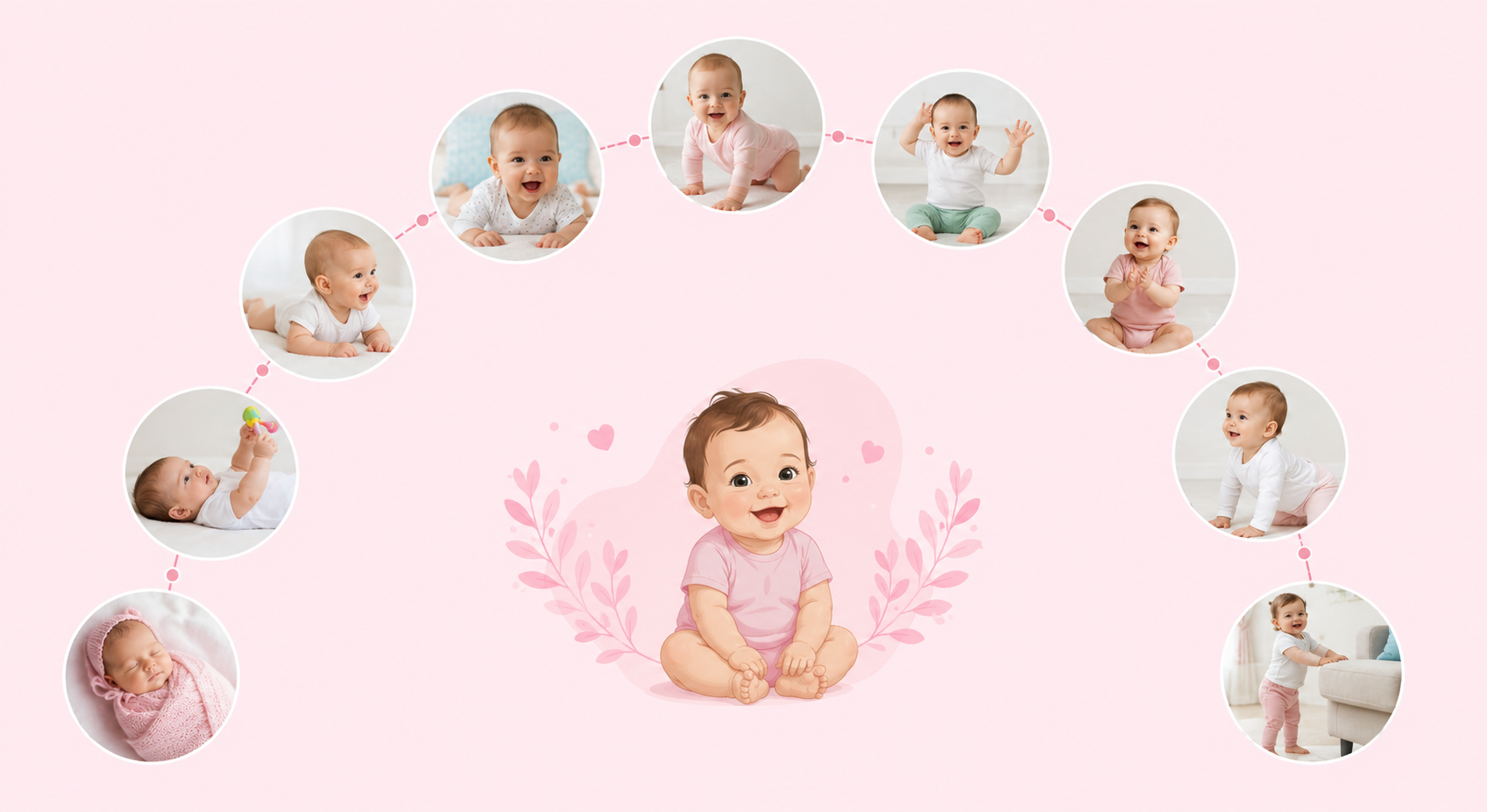
Month 1 – The Newborn Phase
Your baby has just arrived and is adjusting to the world outside the womb. At this stage, everything is driven by reflexes — rooting, sucking, and the startle reflex (Moro reflex). Newborns sleep between 16 to 18 hours a day, waking every 2–3 hours to feed. Don't expect eye contact just yet, but your baby can already recognise your voice — it's been hearing it for months.
Month 2 – The First Real Smile
This is the moment most parents wait for. Around 6 to 8 weeks, your baby produces the first genuine, social smile — not gas! They start cooing and making soft sounds, and their eyes begin tracking moving objects. Sleep patterns are still unpredictable, but you'll notice your baby is a little more alert and engaged during awake time.
Month 3 – Holding the Head Up
Tummy time starts paying off. Your baby can now briefly lift and hold their head up when placed on their stomach. They're also beginning to bat at dangling toys, showing early hand-eye coordination. Laughter — those tiny, melting giggles — often appears around this month.
Month 4 – Rolling and Reaching
Your baby may start rolling from tummy to back around now. They're grabbing objects with more intention and bringing them straight to their mouth. Familiar faces bring big reactions — your baby is starting to recognise and prefer the people they see most.
Month 5 – Sitting with Support and Teething Begins
Prop your baby up and they'll sit for short periods. Many parents notice early teething signs this month — drooling, fussiness, and chewing on anything nearby. Your baby is also becoming more vocal, responding to your voice with sounds and expressions.
Month 6 – Solids and First Words of Babble
The 6-month mark is a big one. Most babies are developmentally ready to start solid foods — typically starting with smooth purees. They can sit independently for brief moments, and you'll start hearing consonant sounds: "ba," "da," "ma." It doesn't mean anything yet, but those sounds are the building blocks of real speech.
Month 7 – Getting Ready to Crawl
Your baby is mobile now, or nearly there. They'll rock back and forth on their hands and knees and may scoot or drag themselves forward. They also clearly respond to their own name and begin showing signs of stranger anxiety — crying when unfamiliar faces get too close.
Month 8 – Crawling and Pulling Up
Most babies crawl this month, though some skip crawling entirely and move straight to other methods of getting around. They'll also start pulling themselves up to stand using furniture. The pincer grip — picking up small objects between the thumb and forefinger — begins developing around now.
Month 9 – Cruising and Understanding "No"
Your baby is now walking along furniture, which is called "cruising." They understand simple words and commands, including "no." They're pointing at things they want, waving bye-bye, and love interactive games like peekaboo. Separation anxiety is also common at this stage.
Month 10 – Standing Solo
Many babies can stand for a few seconds without holding onto anything. They're clapping their hands, shaking their heads, and saying "mama" or "dada" with purpose — meaning they actually know who they're calling. Communication is becoming more intentional every day.
Month 11 – First Steps (for Some Babies)
Some babies take their very first steps this month, while others wait a little longer — both are completely normal. Your baby loves imitating actions they see you do and may begin drinking from a sippy cup. Vocabulary is still small, but understanding of language grows rapidly.
Month 12 – Happy First Birthday!
By 12 months, many babies are walking — wobbly but determined. Most say one to three recognisable words and understand many more. They love simple cause-and-effect toys, playing alongside others, and being the centre of attention. This is the end of the newborn era and the beginning of toddlerhood.
A Note for Parents
These milestones are general guidelines, not strict deadlines. Premature babies may hit milestones later, and some babies simply develop on their own schedule. If you're concerned about your baby's development at any point, speak with your paediatrician. You know your baby best — trust your instincts.
