

Listen to this article
Tap play — works on desktop and mobile
IUI (Intrauterine Insemination) is a simple, affordable fertility treatment where washed sperm is placed directly into the uterus around ovulation.
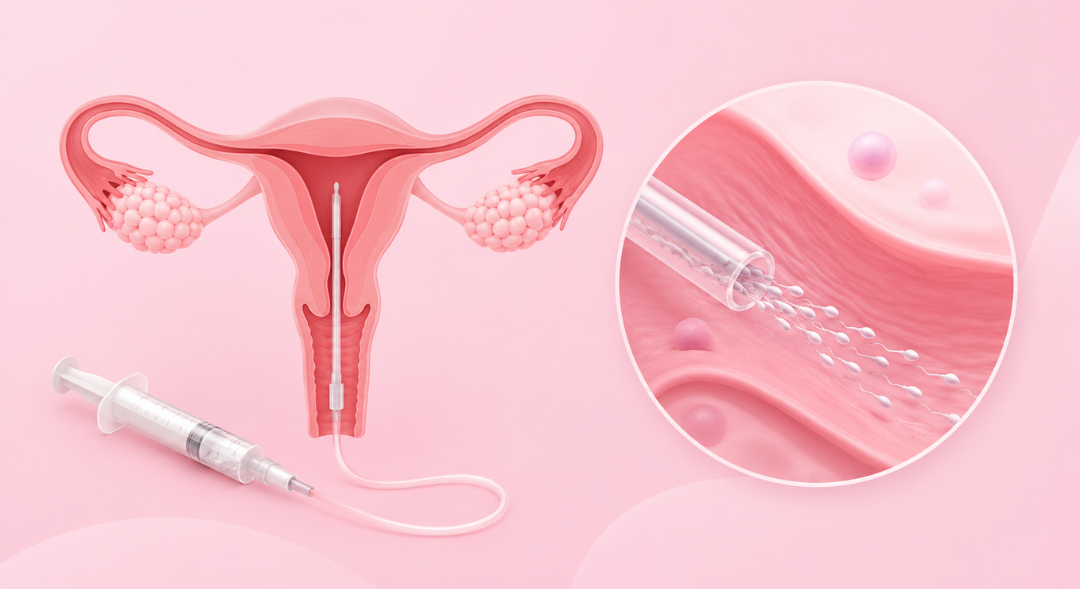
IUI, or intrauterine insemination, is a fertility treatment where washed and concentrated sperm is placed directly into the uterus around the time of ovulation. The goal is straightforward: shorten the distance sperm must travel to reach the egg, increasing the chances of fertilization.
IUI is often described as the "first step" in fertility treatment — less invasive and more affordable than IVF (in vitro fertilization), yet significantly more effective than timed intercourse alone. It is performed at a fertility clinic or IVF center and typically takes just a few minutes in the doctor's office.
IUI vs IVF: What's the Difference?
One of the most common questions patients have is: Should I try IUI or IVF?
IUI | IVF | |
|---|---|---|
Where fertilization occurs | Inside the body | Outside the body (lab) |
Invasiveness | Minimal | Moderate to high |
Cost per cycle | Lower | Higher |
Success rate per cycle | 10–20% | 40–50%+ |
Best for | Mild infertility, donor sperm | Severe infertility, blocked tubes |
IUI is typically recommended first when infertility is unexplained, mild, or related to sperm motility. IVF is recommended when IUI has failed multiple times, tubes are blocked, or egg quality is a concern. Your doctor at an IVF center will assess your full profile before recommending either path.
Who Is IUI Recommended For?
IUI is a suitable option for a range of patients, including:
Couples with unexplained infertility — no identifiable cause after testing
Mild male factor infertility — low sperm count or motility issues
Single women or same-sex couples using donor sperm
Cervical mucus problems — where sperm cannot easily travel through the cervix
Ovulation disorders — such as PCOS, where ovulation is irregular
Mild endometriosis
IUI is not recommended when fallopian tubes are blocked, ovarian reserve is severely diminished, or when sperm counts are extremely low. In those cases, IVF is the more appropriate treatment.
The IUI Process: Step by Step
Understanding what happens during an IUI cycle helps set expectations. Here's how a typical cycle unfolds:
Step 1: Ovarian Stimulation (Optional)
Many IUI cycles are done with oral medications like Clomid (clomiphene citrate) or low-dose injectable gonadotropins to stimulate the ovaries to produce one or two mature follicles. This improves the odds compared to a natural cycle. Your doctor will monitor with ultrasound and blood tests.
Step 2: Tracking Ovulation
Timing is everything in IUI. Clinics monitor the growth of follicles using transvaginal ultrasound. Once a dominant follicle reaches around 18–20mm, an hCG trigger shot is given to induce final egg maturation. This is where an ovulation calculator can play a supporting role — while a clinical ovulation predictor or ultrasound is the gold standard, tracking your cycle at home can help you and your doctor anticipate your natural cycle pattern.
Step 3: Sperm Preparation
On the day of the procedure, the sperm sample (from a partner or sperm donor) is processed in the lab through a technique called "sperm washing." This concentrates the healthiest, most motile sperm into a small volume of fluid, removing seminal plasma that could cause cramping if introduced directly into the uterus.
Step 4: The Insemination
A thin, flexible catheter is passed gently through the cervix into the uterus. The washed sperm sample is then slowly injected. The process is quick — usually under five minutes — and most women describe it as similar to a Pap smear. Mild cramping is common.
Step 5: The Two-Week Wait
After insemination, patients wait approximately two weeks before taking a pregnancy test. During this period, progesterone plays a critical role — it thickens the uterine lining and suppresses contractions to support implantation. Many clinics prescribe progesterone suppositories as a safety net, while others encourage patients to support their levels naturally through diet and lifestyle. See the section below on how to increase progesterone naturally for practical steps you can take during this window.
How Does an Ovulation Calculator Help With IUI?
An ovulation calculator estimates your fertile window based on your cycle length and last menstrual period. While it does not replace clinical monitoring, it is a useful tool for:
Understanding your baseline cycle before starting treatment
Identifying irregularities that might suggest ovulation problems
Timing a home insemination (for sperm donor use cases)
Helping your fertility doctor schedule baseline appointments
For the most accurate results during an IUI cycle, always follow your clinic's monitoring protocol — ovulation calculators are a first step, not a substitute for ultrasound.
The Role of Progesterone in IUI Success
Progesterone is often called the "pregnancy hormone" — and for good reason. After ovulation, the ruptured follicle transforms into the corpus luteum, which produces progesterone to prepare the uterine lining for implantation and maintain early pregnancy.
In an IUI cycle, progesterone matters at three key points:
Before IUI: A low pre-ovulatory progesterone (under 1.5 ng/mL on the day of the trigger shot) confirms the follicle hasn't already ruptured, ensuring the insemination is timed correctly.
After IUI: Progesterone levels are checked around 7 days post-procedure to confirm ovulation occurred. A level above 10 ng/mL indicates a healthy luteal phase.
After a positive pregnancy test: Rising progesterone alongside hCG is a reassuring sign of a viable early pregnancy.
When fertility medications like Clomid or gonadotropins are used, they can sometimes blunt the body's natural progesterone output after ovulation — which is why many IVF centers routinely prescribe progesterone supplements (vaginal suppositories or oral capsules) starting 2–3 days after IUI.
How to Increase Progesterone Naturally During an IUI Cycle
If your progesterone levels are borderline or your doctor has not yet prescribed supplements, how to increase progesterone naturally is a question many IUI patients ask. While no natural method replaces prescribed supplementation when clinically needed, the following evidence-informed strategies can support healthy progesterone production:
1. Eat Progesterone-Supporting Foods Certain nutrients directly support the corpus luteum's ability to produce progesterone. Focus on:
Zinc-rich foods (pumpkin seeds, lentils, chickpeas) — zinc supports LH production, which triggers progesterone release
Vitamin B6 (bananas, poultry, potatoes) — deficiency is linked to low progesterone and luteal phase defects
Magnesium (leafy greens, nuts, dark chocolate) — helps regulate the HPA axis and reduces cortisol, which competes with progesterone
Healthy fats (avocado, olive oil, eggs) — progesterone is synthesized from cholesterol, making adequate dietary fat essential
2. Manage Stress Actively Chronic stress elevates cortisol, which shares a precursor molecule with progesterone. When the body prioritizes cortisol production, progesterone synthesis can fall — a process sometimes called "progesterone steal." Practices like yoga, mindfulness, and adequate sleep directly lower cortisol and can help preserve progesterone levels during the two-week wait.
3. Maintain a Healthy Weight Excess body fat increases estrogen dominance, which can suppress progesterone. Conversely, being underweight can cause the body to under-produce reproductive hormones altogether. Achieving a BMI in the healthy range before and during IUI treatment supports more balanced hormone production.
4. Limit Intense Exercise While moderate exercise is beneficial, excessive high-intensity training can suppress the hypothalamic-pituitary-ovarian axis and reduce luteal phase progesterone. During the two-week wait especially, opt for gentle walks, stretching, or light yoga over intense cardio.
5. Consider Vitex (Chasteberry) — With Caution Vitex agnus-castus is an herbal supplement that may support the luteal phase by stimulating LH and reducing prolactin, indirectly raising progesterone. However, it should only be used with your doctor's knowledge, as it can interfere with fertility medications and cycle monitoring.
Important: Natural strategies work best as a complement to clinical care — not a replacement. If your doctor recommends progesterone supplementation after IUI, take it as prescribed. Natural approaches are most helpful for women with borderline levels or those in the prep phase before starting a cycle.
IUI Success Rates: What to Expect
IUI success rates depend on multiple factors:
Age of the woman — success rates are highest under 35
Cause of infertility — unexplained infertility responds better than tubal issues
Stimulated vs. natural cycle — stimulated cycles generally have higher success rates
Sperm quality — post-wash total motile sperm count is a key predictor
On average, each IUI cycle has a 10–20% success rate. Over three to six cycles, cumulative success rates climb to 30–50% for suitable candidates. Most fertility specialists recommend 3–6 IUI attempts before moving on to IVF.
IUI Cost in India: What Does It Typically Cost?
IUI is considerably more affordable than IVF, making it the preferred first-line treatment for many couples in India. Here's a breakdown of what to expect:
Treatment | Cost (Without Medications) | Cost (With Medications) |
|---|---|---|
IUI | ₹15,000 – ₹20,000 | ₹15,000 – ₹35,000 |
IVF | ₹1,00,000 – ₹1,50,000 | ₹1,50,000 – ₹2,50,000+ |
At leading IVF centers like Iswarya Fertility, a single IUI cycle is priced between ₹15,000 and ₹20,000, which includes ovulation monitoring, sperm preparation, and the insemination procedure. Medication costs are additional and vary based on the protocol your doctor recommends.
For patients concerned about affordability, many fertility centers across India — including Iswarya Fertility's 91+ centres — offer IVF on EMI starting at ₹9,999/month, making advanced fertility care accessible without a large upfront payment.
Costs vary depending on your city, the IVF center or fertility clinic you choose, whether donor sperm is used, and your specific treatment protocol. Many fertility centers offer multi-cycle packages at a discounted rate — always ask your clinic about package options before starting treatment.
Risks and Side Effects of IUI
IUI is generally very safe, but it does carry some risks:
Multiple pregnancies — stimulated cycles carry a small risk of twins or more
Ovarian hyperstimulation syndrome (OHSS) — a rare but serious response to fertility medications
Mild cramping and spotting — common immediately after the procedure
Infection — very rare, as the procedure is performed under sterile conditions
Serious complications from IUI alone are uncommon. The risks increase slightly when fertility medications are used.
IUI at an IVF Center: What to Look For
When choosing where to have your IUI, consider seeking care at a dedicated IVF center or fertility clinic rather than a general OB-GYN practice. Specialized fertility centers offer:
In-house andrology labs for sperm washing
Advanced ultrasound monitoring
On-site hormone testing
Access to IVF if IUI is unsuccessful
Experienced reproductive endocrinologists
A good IVF center will also counsel you transparently on when to escalate from IUI to IVF, so you don't spend unnecessary time or money on cycles unlikely to succeed.
Frequently Asked Questions About IUI
Is IUI painful? Most patients experience mild discomfort — similar to period cramps. The procedure itself takes only a few minutes.
How many IUI cycles should I try before moving to IVF? Most doctors recommend 3–6 cycles depending on age and diagnosis. Women over 38 may be advised to move to IVF sooner.
Can I track ovulation at home during IUI treatment? Yes. Using an ovulation calculator or LH test strips alongside clinical monitoring can help you stay informed, though clinical ultrasound remains the most accurate method.
Is progesterone supplementation always needed after IUI? Not always — it depends on your clinic's protocol, your cycle type, and your progesterone levels. Women on stimulated cycles are more likely to need support. Ask your doctor whether supplementation is right for you.
Can I increase progesterone naturally instead of taking supplements? Natural strategies like diet, stress management, and healthy weight can support progesterone production, but they are not a substitute for prescribed supplementation when levels are clinically low. Always follow your fertility specialist's guidance.
Coverage varies widely. Some plans cover diagnostic testing and medications; others cover IUI procedures. Check your specific policy or ask your IVF center's billing department.
The Bottom Line
IUI is a well-established, minimally invasive fertility treatment that gives many couples and individuals a meaningful chance at pregnancy before considering more intensive options like IVF. By understanding the process — from ovulation tracking and sperm preparation to the insemination procedure itself — and supporting your body with healthy progesterone levels naturally and medically, you can approach your fertility journey with confidence.
If you're considering IUI, start by consulting with a reproductive endocrinologist at a reputable IVF center who can evaluate your unique situation, recommend the right number of cycles, and help you make an informed decision about next steps.
Disclaimer: This article is for informational purposes only and does not constitute medical advice. Always consult a qualified fertility specialist for diagnosis and treatment.

