

Listen to this article
Tap play — works on desktop and mobile
Learn about the best age for IUI, how age affects fertility and treatment success, and the key factors to consider before starting an IUI Procedure. Discover how IUI Treatment in India may help suitable couples and when to consult a fertility specialist. Explore your fertility options with Iswarya Fertility Centre.
Choosing the right time to seek fertility treatment can be an important decision for couples planning a family. Intrauterine Insemination (IUI) is a fertility treatment that places specially prepared sperm directly into the uterus around ovulation to help achieve pregnancy. Although IUI can be considered at different ages, a woman's age, egg quality, sperm health, and underlying fertility conditions can influence the chances of success.
Understanding how age affects fertility can help couples decide when to seek medical advice. At Iswarya Fertility Centre, a fertility consultation can help couples understand their reproductive health and explore suitable treatment options.
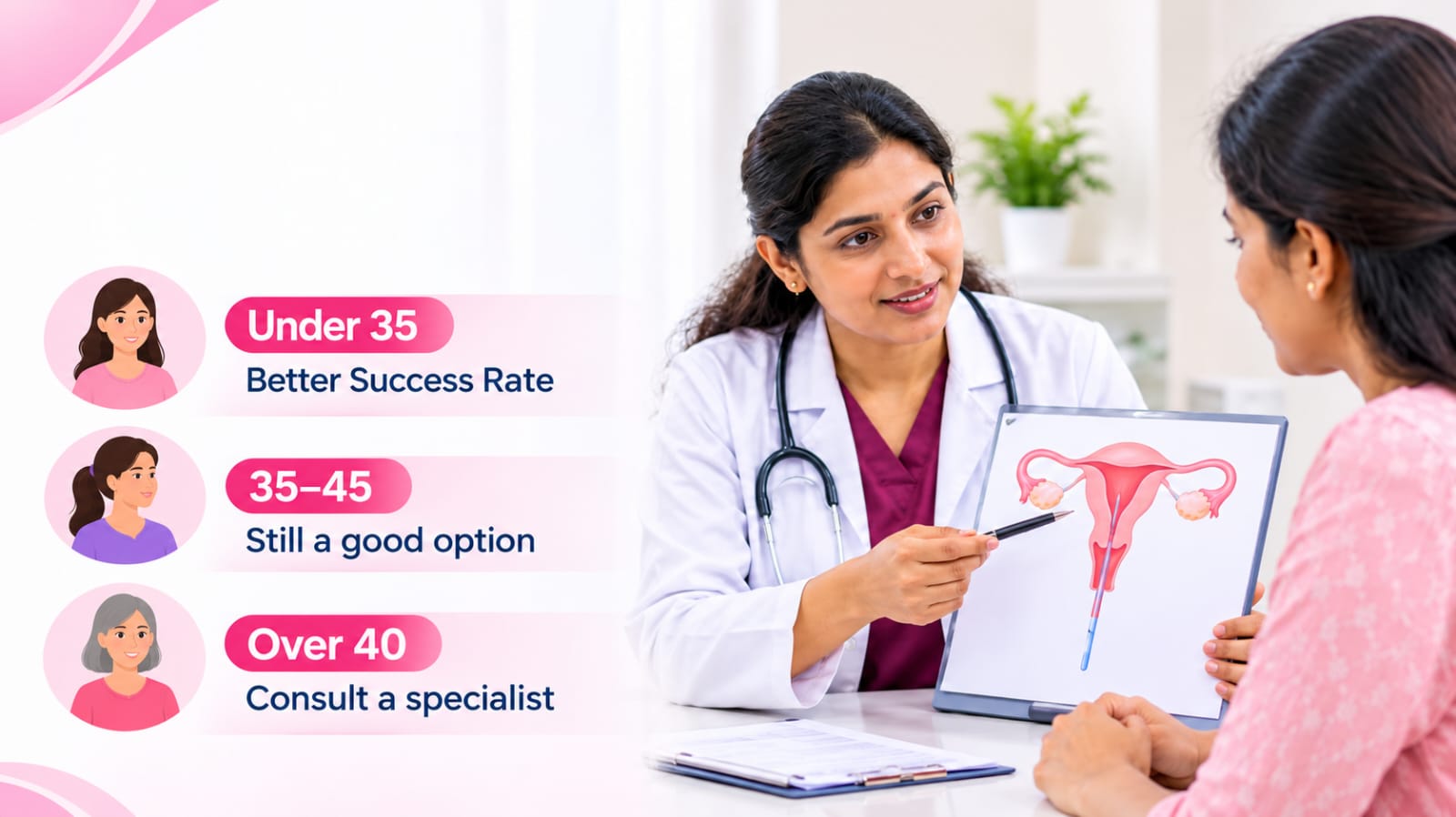
What Is the Best Age for IUI Treatment?
There is no single age that is best for everyone undergoing IUI Treatment. However, fertility outcomes are generally more favourable at younger reproductive ages because egg quality and quantity tend to decline as women get older.
For many women, the period before age 35 may offer better chances of success with IUI. However, age alone does not determine whether the treatment will work. The cause of infertility, ovulation patterns, fallopian tube health, and sperm quality also play important roles.
Women over 35 may still be suitable candidates for IUI, depending on their fertility assessment. Since fertility can decline more rapidly during the late 30s and beyond, seeking advice early can help avoid unnecessary delays in choosing an appropriate treatment.
How Does Age Affect IUI Success?
Age can influence fertility by affecting the number and quality of eggs available for fertilisation. The following age groups provide a general overview.
1. IUI Before Age 35
Women under 35 generally have better natural fertility potential than older women. For suitable candidates, IUI may be considered when there are issues such as mild male-factor infertility, ovulation difficulties, or unexplained infertility.
Before beginning treatment, a specialist may assess ovulation, the fallopian tubes, the uterus, and the male partner's semen analysis. These investigations help determine whether IUI is an appropriate option.
2. IUI Between Ages 35 and 40
Pregnancy through IUI is still possible between ages 35 and 40. However, declining egg quality and quantity can reduce the likelihood of success, and the time available for treatment decisions becomes more important.
A fertility specialist may recommend an individualised plan based on ovarian reserve, medical history, and previous attempts to conceive. Depending on these findings, the doctor may discuss a limited number of IUI cycles or alternative treatments, including IVF.
3. IUI After Age 40
After age 40, IUI success rates generally decline because of age-related changes in egg quality and ovarian reserve. Some women may still be candidates, but the likelihood of success depends on their individual circumstances.
A prompt fertility assessment is particularly important in this age group. A specialist can explain whether IUI is reasonable or whether another treatment may offer a more suitable approach without unnecessary delays.
What Factors Matter Besides Age?
Although age is an important factor, it is not the only consideration when planning IUI Treatment in India. Other factors that may influence the outcome include:
Egg quality and ovarian reserve: These help the specialist understand reproductive potential and guide treatment planning.
Sperm quality: Sperm count, movement, and the number of suitable sperm after laboratory preparation can affect the chances of fertilisation.
Fallopian tube health: At least one suitable, open fallopian tube is generally needed for IUI to work.
Ovulation timing: Insemination needs to be coordinated with ovulation to give sperm the opportunity to reach the egg.
Underlying fertility conditions: Conditions such as PCOS, endometriosis, or significant male-factor infertility may influence whether IUI is suitable.
Previous fertility history: Previous pregnancies, duration of infertility, and earlier treatment outcomes can help guide the next steps.
A comprehensive assessment of both partners helps the fertility specialist recommend treatment based on medical needs rather than age alone.
How Does the IUI Procedure Work?
The IUI Procedure usually involves several steps designed to time insemination around ovulation.
1. Ovulation monitoring: Ultrasound scans help track follicle development and identify the appropriate time for insemination. Medication may be prescribed when needed.
2. Sperm preparation: A semen sample is processed in the laboratory to concentrate suitable sperm.
3. Insemination: The prepared sperm is placed into the uterus using a thin, flexible catheter. The procedure is generally brief.
4. Follow-up and pregnancy testing: Some patients may receive medication after insemination, depending on their treatment plan. A pregnancy test is usually recommended around two weeks after the procedure, following the clinic's instructions.
The exact treatment plan and timeline may differ from person to person.
When Should You Consult a Fertility Specialist?
Women under 35 are generally advised to seek a fertility evaluation after 12 months of regular, unprotected intercourse without pregnancy. Women aged 35 or older should usually seek evaluation after six months. Those over 40, or anyone with known fertility concerns such as irregular periods or suspected tubal problems, may benefit from earlier assessment.
At Iswarya Fertility Centre, couples can discuss their fertility history, understand whether IUI is suitable, and explore other options when needed.
Conclusion
So, what is the best age for IUI? While treatment outcomes are generally more favourable at younger ages, there is no universal age that guarantees success. Egg quality, sperm health, fallopian tube function, and the underlying cause of infertility all influence the decision.
If you are considering IUI, consult a fertility specialist to understand your options and determine the most appropriate next step for your circumstances.
Disclaimer: This article is for general educational purposes and does not replace personalised medical advice.
