

Listen to this article
Tap play — works on desktop and mobile
Understand ICSI Treatment in India, including its procedure, eligibility, success rate and cost. Learn how ICSI differs from IVF and explore fertility care at Iswarya Fertility Centre.
For couples experiencing fertility challenges, choosing the right treatment is an important step towards planning a pregnancy. ICSI Treatment (Intracytoplasmic Sperm Injection) is an advanced fertilization technique performed as part of an IVF cycle. It involves selecting a single sperm and injecting it directly into a mature egg in a laboratory.
ICSI is particularly useful for couples experiencing male-factor infertility or previous fertilization difficulties. Understanding the procedure, eligibility, success factors and treatment cost can help couples make informed decisions with their fertility specialist.
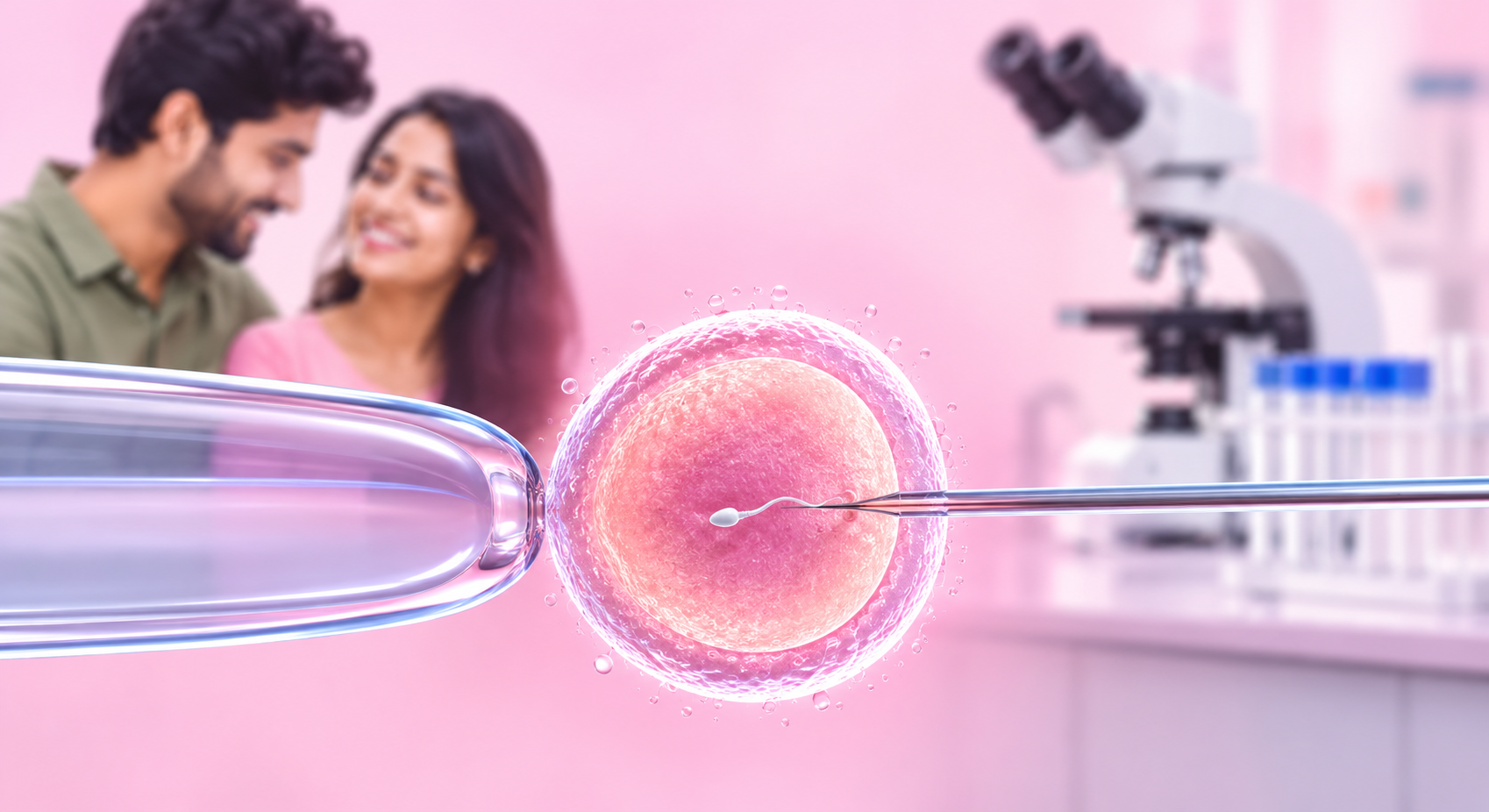
What Is ICSI Treatment?
ICSI is a specialized fertilization technique used during IVF. In conventional IVF, eggs and sperm are placed together in a laboratory dish, allowing fertilization to occur naturally. In ICSI, an embryologist selects one sperm and injects it directly into each mature egg using a specialized microscopic instrument.
This method helps overcome certain sperm-related fertilization challenges. To understand the technique in more detail, read our guide on What Is ICSI Treatment?.
Who Is Eligible for ICSI Treatment?
ICSI may be recommended after evaluating both partners' fertility health. A fertility specialist may consider this procedure in the following situations:
Low sperm count: When the semen sample contains fewer sperm than expected.
Poor sperm motility: When sperm have difficulty moving effectively towards the egg.
Abnormal sperm morphology: When a high proportion of sperm have an unusual shape that may affect fertilization.
Azoospermia: When sperm are absent from the semen sample and need to be retrieved through a suitable medical procedure.
Previous fertilization difficulties: When conventional IVF has resulted in low or no fertilization.
Surgically retrieved sperm: When sperm are collected directly from the reproductive system.
Not every couple experiencing infertility requires ICSI. The specialist considers medical history, semen analysis, ovarian reserve and previous treatment outcomes before recommending it.
How Does ICSI Treatment Work?
ICSI follows most of the same stages as an IVF cycle. The main difference is the method used to fertilize the egg.
1. Fertility Assessment
Both partners undergo medical evaluations. These may include hormone tests, ultrasound scans and semen analysis to understand the possible causes of infertility.
2. Ovarian Stimulation
The female partner receives prescribed hormone injections to encourage the ovaries to produce multiple mature eggs. Ultrasound scans and blood tests help monitor their development.
3. Egg Retrieval
Once the eggs are ready, they are collected from the ovaries through a minor procedure performed under sedation.
4. Sperm Collection and Preparation
A semen sample is collected and processed in the laboratory. If sperm are not present in the semen, a specialist may consider surgical sperm retrieval, such as TESA or PESA, depending on the medical condition.
5. Sperm Injection and Fertilization
An embryologist selects a suitable sperm and injects it directly into each mature egg using specialized equipment. The eggs are then monitored to check for fertilization.
6. Embryo Development and Transfer
Fertilized eggs are observed as they develop into embryos. Depending on the treatment plan, a suitable embryo may be transferred into the uterus or frozen for future use.
7. Pregnancy Test
A blood test, usually around 10–14 days after embryo transfer, helps determine whether pregnancy has occurred.
What Is the Success Rate of ICSI Treatment?
The success of ICSI depends on several individual factors, including the female partner's age, egg quality, sperm health, embryo development and uterine condition.
ICSI can help improve fertilization chances when there are significant sperm-related problems or previous fertilization difficulties. However, successful fertilization does not automatically mean that pregnancy will occur. Embryo implantation and pregnancy development also play important roles.
There is no single success rate that applies to every couple. Your fertility specialist can explain the expected outcomes based on your test results and treatment history.
To understand the factors that influence treatment outcomes, read How Many ICSI Cycles to Get Pregnant?.
Is ICSI More Successful Than IVF?
ICSI and conventional IVF are both fertilization methods used during an IVF cycle. Neither method is universally better for every couple.
ICSI may be more suitable when sperm count, movement or morphology is significantly affected, or when fertilization has not occurred in a previous conventional IVF cycle. Conventional IVF may be appropriate when sperm parameters are suitable and there is no specific indication for ICSI.
The choice depends on the couple's fertility assessment rather than the assumption that one method always produces better results. Read more about the difference between IVF and ICSI and whether ICSI is more successful than IVF.
Is ICSI Treatment Painful for Men?
The sperm injection itself takes place in the laboratory, so the male partner does not feel the injection. In most cases, sperm are collected through a routine semen sample.
If sperm need to be retrieved surgically through procedures such as TESA or PESA, the experience and recovery may differ. These procedures are performed with appropriate medical support and anaesthesia or sedation as advised.
For more information, read Is ICSI Painful for Men?.
What Is the Cost of ICSI Treatment in India?
The cost of ICSI Treatment in India varies depending on the clinic, treatment plan, medication requirements and additional procedures. The overall expense may include fertility assessments, ovarian stimulation medicines, egg retrieval, laboratory procedures, embryo culture and embryo transfer.
At Iswarya Fertility Centre, ICSI-IVF treatment is listed with a starting price of ₹99,000. The final cost may vary depending on individual medical requirements and any additional procedures, such as surgical sperm retrieval or genetic testing. Couples should confirm the latest package inclusions and charges during consultation.
ICSI Treatment at Iswarya Fertility Centre
Choosing the right fertility treatment begins with understanding the medical needs of both partners. At Iswarya Fertility Centre, couples can consult fertility specialists for assessment, personalized treatment planning and guidance throughout the ICSI process.
If you are exploring fertility options, speak with a specialist to understand whether ICSI is appropriate for your situation. With the right evaluation and treatment plan, you can take an informed step towards your pregnancy goals.
Disclaimer: This article is for general educational purposes and does not replace personalized medical advice from a fertility specialist.
