
Listen to this article
Tap play — works on desktop and mobile
Learn how to emotionally accept donor eggs, overcome concerns about genetic connection, and prepare for the donor egg IVF journey. Explore the benefits of counselling, partner support, the difference between Egg Donation Treatment and Egg Freezing, and fertility care options at Iswarya Fertility Centre.
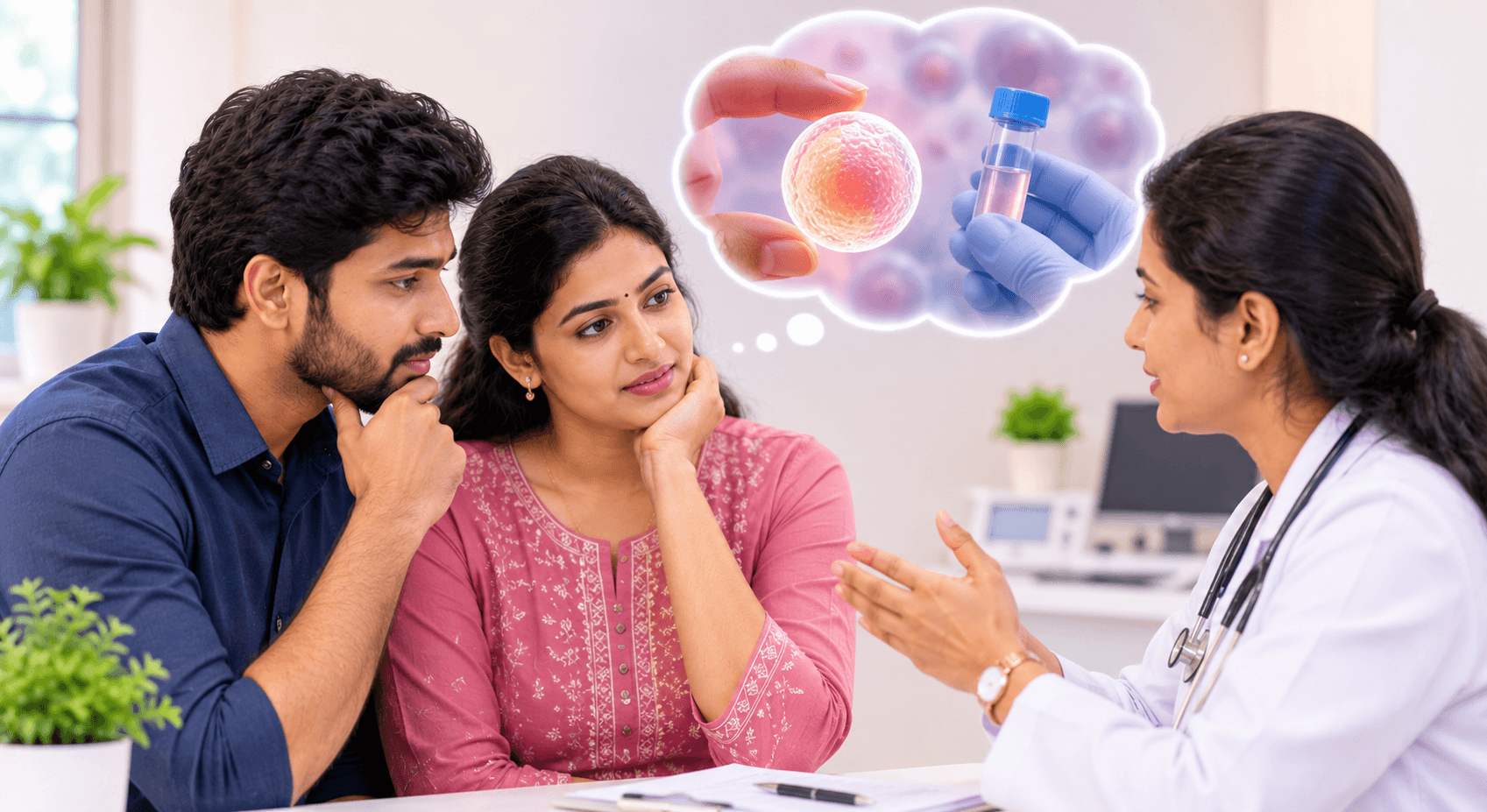
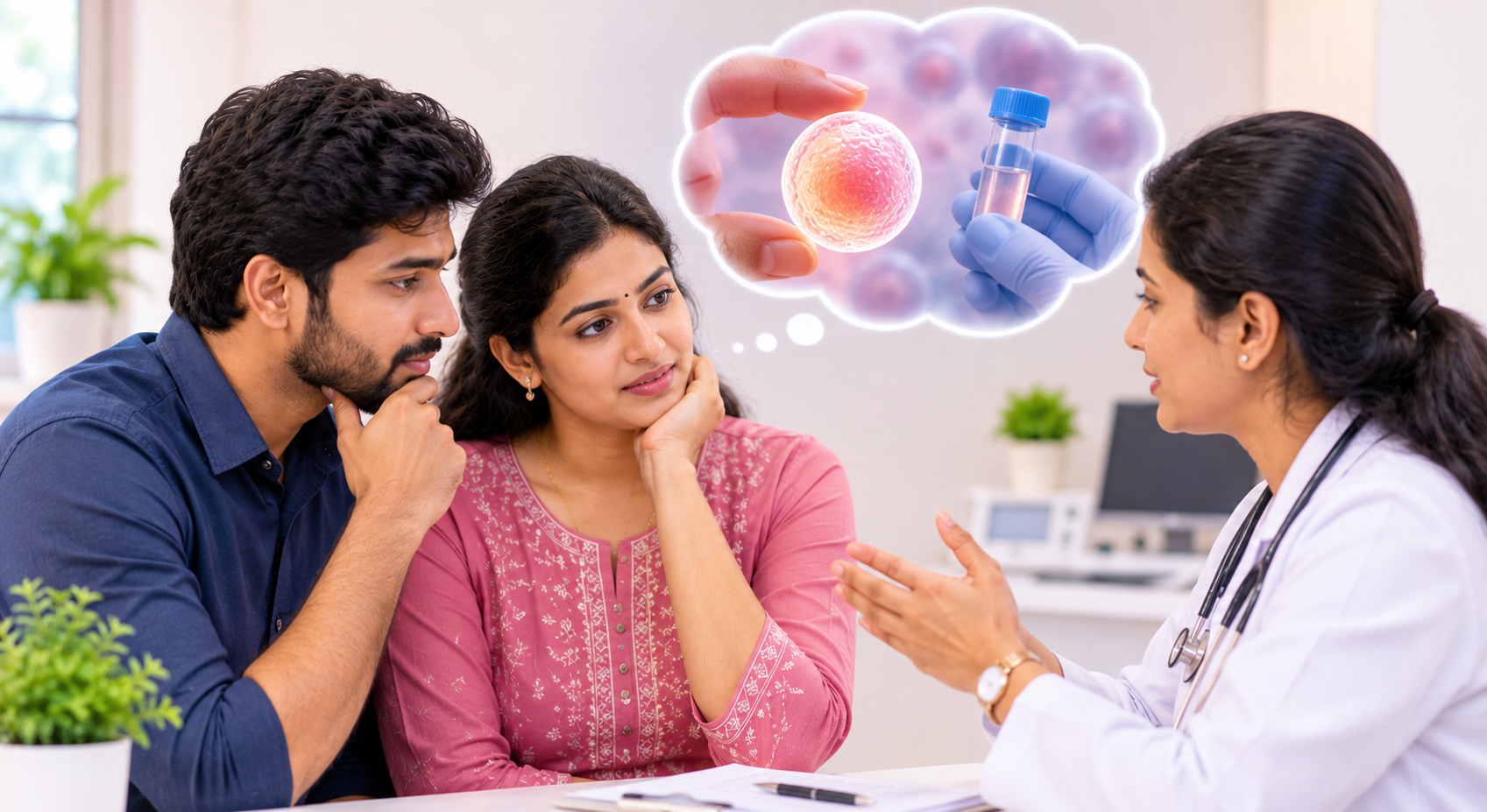
Choosing to use donor eggs can be an important decision for couples experiencing fertility challenges. When doctors recommend donor eggs, women may experience different emotions, including uncertainty, sadness, fear or relief. While the treatment may offer another opportunity to experience pregnancy, accepting that the baby will not be genetically related to the mother can take time.
It is important to understand that these feelings are normal. Every couple has a different fertility journey, and there is no fixed timeline for accepting donor eggs. Learning about the procedure, discussing concerns openly and receiving emotional support can help couples make a confident decision.
What Is Egg Donation Treatment?
Egg Donation Treatment is an assisted reproductive technique in which eggs from a carefully screened donor are fertilized with sperm in a laboratory. The resulting embryo is then transferred into the recipient woman's uterus.
The recipient carries the pregnancy and experiences childbirth. Although the egg does not come from her own body, she plays an important role in the pregnancy and the child's development.
Doctors may recommend this treatment for women with premature ovarian insufficiency, poor egg quality, low ovarian reserve, certain inherited genetic conditions or repeated IVF cycles without suitable embryos.
At Iswarya Fertility Centre, the egg donation programme includes recipient evaluation, donor selection, medical screening, cycle synchronization, fertilization and embryo transfer.
Why Can Accepting Donor Eggs Feel Difficult?
For many women, the idea of using another woman's eggs can bring emotional challenges. The original expectation of having a child genetically related to both partners may change, and adjusting to this possibility can take time.
Some common concerns include:
Genetic connection: Worrying that the child will not share the mother's genetic characteristics.
Emotional bonding: Wondering whether it will be possible to develop the same connection with the baby.
Family reactions: Feeling concerned about how relatives or friends may respond.
Personal expectations: Experiencing sadness about not being able to conceive using one's own eggs.
Future questions: Wondering how and when to explain the donor conception to the child.
A study published in the Journal of Human Reproductive Sciences explored attitudes towards donor eggs, sperm and embryos among Indian couples experiencing infertility. It highlighted that acceptance can be a sensitive issue and that partners may have different views about using donated eggs. This shows why open communication and individual counselling are important.
5 Ways to Accept the Decision to Use Donor Eggs
1. Give Yourself Time to Process Your Feelings
You do not have to accept the decision immediately. It is natural to experience sadness, confusion or disappointment when your fertility journey takes a different direction than expected.
Allow yourself to understand these emotions without feeling guilty. Some women may feel ready to proceed after one discussion, while others may need more time and support.
Remember that choosing donor eggs is a personal decision, and you should feel comfortable before moving forward.
2. Understand the Pregnancy and Parenting Journey
One common concern is whether the mother will feel connected to a baby conceived using donor eggs.
In donor egg IVF, the embryo is transferred into the recipient's uterus, where the pregnancy develops. The recipient experiences the physical journey of pregnancy and childbirth and takes on the everyday responsibilities of parenting.
A genetic connection is only one aspect of family relationships. Emotional bonding develops through care, affection, time and shared experiences.
3. Discuss Your Concerns With Your Partner
Both partners should have an opportunity to express their feelings and understand each other's concerns.
Talk openly about questions such as:
Are we both comfortable with using donor eggs?
How do we feel about the genetic connection?
What information would we like to share with our family?
How should we approach conversations with our future child?
Making the decision together can help reduce misunderstandings and strengthen emotional support throughout treatment.
4. Consider Fertility Counselling
Speaking with a qualified fertility counsellor can help you understand the emotional, social and family-related aspects of donor conception.
Counselling provides a safe space to discuss grief, uncertainty, expectations, disclosure to the child and concerns about family acceptance. It can also help couples understand donor screening and the limitations of medical or genetic information.
Professional guidance can help you make an informed decision without feeling pressured to choose a particular treatment.
5. Focus on Building Your Family
Try to look beyond the method of conception and consider the family you hope to build. Your journey may be different from what you originally imagined, but that does not make your experience of pregnancy or parenthood less meaningful.
You can also learn about other families who have chosen donor conception, provided you are comfortable doing so. Hearing different experiences may help you understand that there is no single way to build a family.
Is Egg Freezing the Same as Egg Donation?
No. Egg Freezing and egg donation are two different fertility options.
Egg freezing involves collecting and preserving a woman's own eggs for possible future use. It may be considered by women who wish to preserve their fertility before certain medical treatments or for personal reasons.
Egg donation involves using eggs provided by an eligible donor when a woman cannot or should not use her own eggs for treatment.
Your fertility specialist can explain whether using previously frozen eggs, pursuing another own-egg IVF approach or considering donor eggs is appropriate for your medical condition.
How Does Egg Donation Treatment Work at Iswarya Fertility Centre?
The process generally begins with a medical evaluation of the recipient, including blood tests and assessment of the uterus. A suitable donor is selected following the required screening procedures.
The donor's and recipient's treatment cycles are synchronized using medication. The donor's eggs are collected and fertilized with the partner's sperm in the laboratory. A suitable embryo is then transferred into the recipient's uterus.
A blood pregnancy test is generally performed around 14 days after embryo transfer.
At Iswarya Fertility Centre, the fertility team provides donor egg treatment with recipient evaluation, donor screening and guidance throughout the treatment process. Couples can discuss their medical suitability, emotional concerns and treatment options with fertility specialists before making a decision.
Conclusion
Accepting donor eggs is a personal and emotional journey. It may involve understanding genetic differences, discussing concerns with your partner and receiving professional counselling. Give yourself enough time to make the decision without pressure.
With the right medical guidance and emotional support, couples can explore donor egg IVF as another option for building their family. Speak with a fertility specialist to understand whether Egg Donation Treatment is suitable for your individual needs.
Disclaimer: This article is for general educational purposes and does not replace personalized medical advice from a fertility specialist.